
Industrial product category
Vulcanized Labels
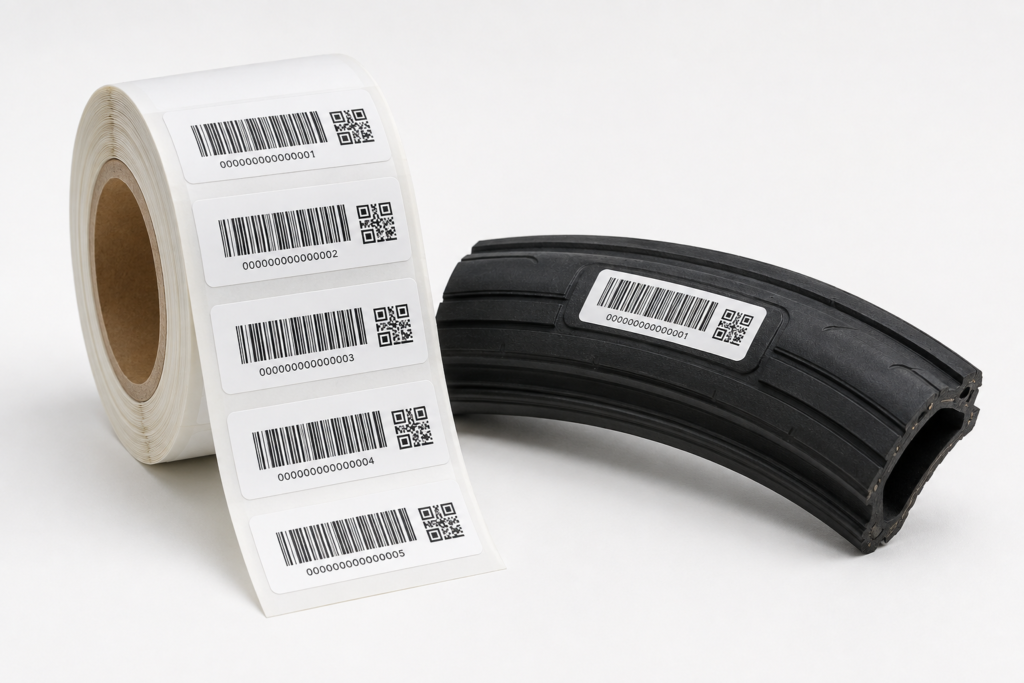
Durable barcode and identification labels engineered for tyres, hoses, belts, and other rubber products using application-specific vulcanizing constructions.
Exact models, availability, and technical specifications are confirmed in the quotation.
Product overview
Vulcanized Labels for industrial applications
Vulcanized labels provide long-lasting identification for rubber products exposed to demanding manufacturing and operating conditions. The selected construction is matched to the rubber compound and production process so the label can bond securely during vulcanization or through an approved post-cure method.
Labels can be customised with company branding, product information, safety or compliance markings, batch and serial numbers, barcodes, and QR codes. Material, dimensions, colours, print method, ribbon, and application format are selected around the substrate, curing process, traceability workflow, and required service life.
Because rubber compounds and curing cycles differ, NEST CODING recommends trials using the customer’s actual rubber material and production conditions before full supply. Final performance depends on the confirmed label construction, surface preparation, application stage, cure temperature, time, pressure, and downstream exposure.
Available range
Models or product types
The exact range depends on the confirmed application and current availability.
Selected post-cure bonding labels
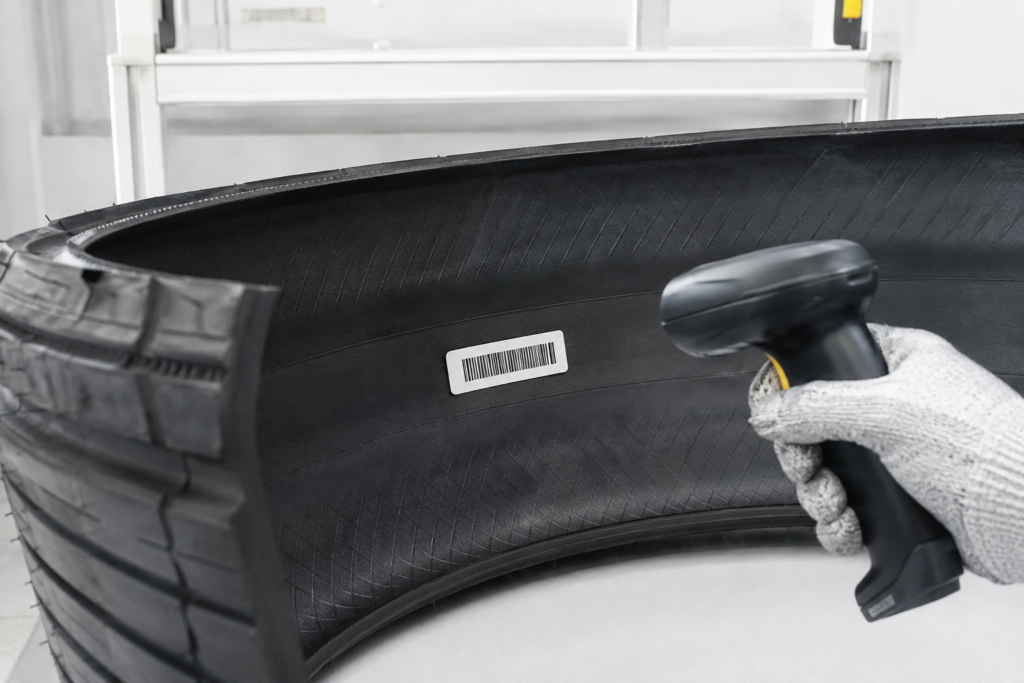
Tyre bead and inner-liner barcode labels
Custom rubber identification labels
Roll, sheet, or individual-label formats
Main features
Configured around the task
- Application-specific constructions for compatible rubber compounds and curing processes
- Custom sizes, shapes, colours, and artwork
- Human-readable text, logos, serial data, barcodes, and QR codes
- Pre-printed and variable-identification options subject to project requirements
- Durable bonding designed for demanding rubber-product environments
- Abrasion, weather, and chemical-resistant options where required
- Roll, sheet, or individual-label supply formats subject to production capability
Customer benefits
A practical operational outcome
- Creates durable identification that becomes closely integrated with the rubber product
- Reduces the risk of ordinary labels peeling or becoming unreadable
- Supports production traceability, quality control, and asset-management workflows
- Maintains branding and identification in demanding operating environments
- Custom configuration for different rubber compounds, curing cycles, and application methods
Applications
Where this category is commonly used
Tyre manufacturing and retread traceabilityBatch, lot, and serial identificationBarcode and QR-code trackingBrand names, logos, and product graphicsProduct specifications and performance ratingsSafety instructions and compliance markingsManufacturing and retread datesFlow direction and component identificationWarranty and asset-identification information
Suitable industries
Manufacturing environments served
Tyre ManufacturingTyre RetreadingAutomotive and TransportIndustrial Hose ManufacturingConveyor and Drive Belt ManufacturingTechnical Rubber ProductsRubber Flooring and MattingSafety Footwear and PPEGeneral Manufacturing
Technical specifications
Confirm the specification before purchase
Specifications depend on the selected model and application. We confirm verified information from the manufacturer or supplier datasheet before quotation.
Editable specification area
Product type: custom vulcanized identification and traceability labels
Application stage: pre-cure or selected post-cure method, confirmed by application
Content options: text, graphics, serial data, 1D barcodes, and QR codes
Supply formats: roll, sheet, or individual labels, subject to specification
Customisation: dimensions, shape, colours, artwork, and data format
Compatibility review: rubber compound, surface condition, curing chemistry, and release agents
Process review: curing temperature, time, pressure, label placement, and application method
Resistance review: abrasion, weather, water, oils, chemicals, flexing, and service environment
Printing review: face material, ink or ribbon, print method, barcode grade, and scanner setup
Final construction and performance must be confirmed through sample trials using the actual rubber compound and production process.
Product gallery
Application and equipment imagery
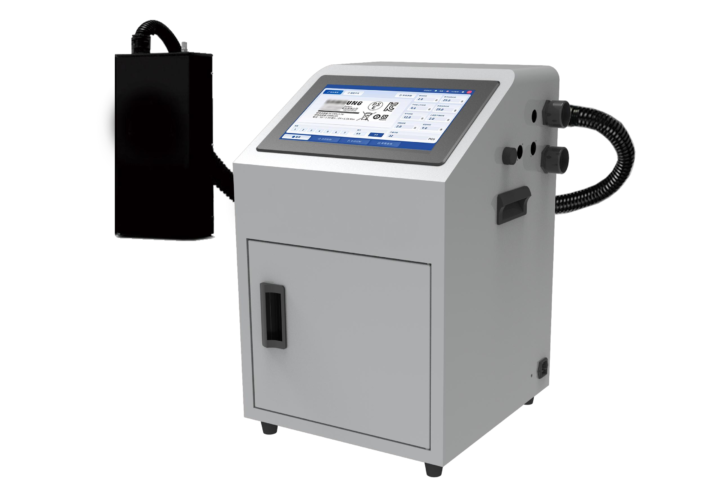
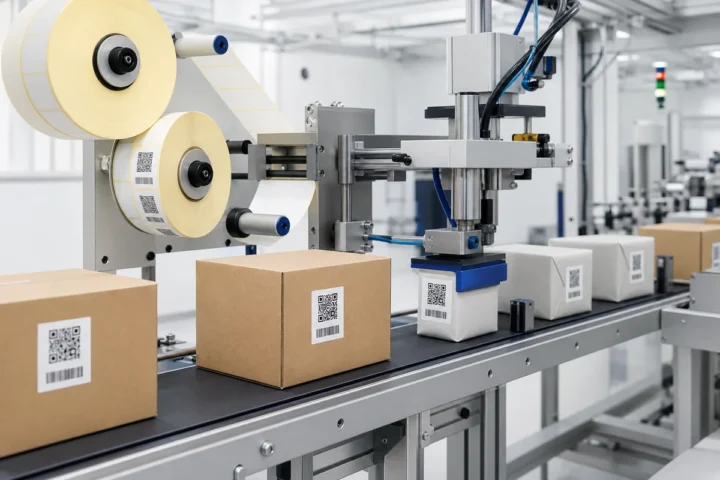
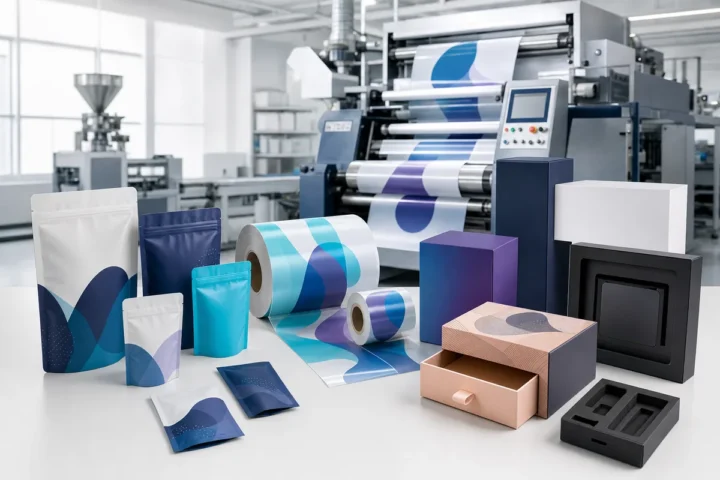
Representative product and line-integration images. Final equipment appearance and installation arrangement depend on the selected model and production line.
Frequently asked questions
Questions about Vulcanized Labels
These answers are general guidance. The formal quotation and confirmed datasheet take precedence.
What is a vulcanized label?
It is a specialised identification label designed to bond with a compatible rubber product during vulcanization or through an approved post-cure process, providing more durable identification than an ordinary general-purpose label.
Which rubber products can use vulcanized labels?
Common applications include new and retreaded tyres, industrial hoses, conveyor and drive belts, rubber mats, seals, gaskets, safety products, and other moulded rubber parts. Compatibility must be tested for the actual compound and process.
Can the labels carry barcodes or QR codes?
Yes. Human-readable data, serial numbers, 1D barcodes, and QR codes can be considered. The print method, contrast, barcode size, scanner, cure cycle, and service conditions must be validated together.
Are all vulcanized labels suitable for the same temperature?
No. Temperature capability depends on the exact face material, bonding system, ink or ribbon, rubber compound, curing time, pressure, and application method. The required cure profile should be supplied for product selection.
What information is required for a quotation?
Provide the rubber product and compound, label size and artwork, required data, application stage, curing temperature, time and pressure, surface condition, expected resistance, annual quantity, and representative samples where possible.
Related products
Complete the printing or labelling workflow
Next step
Discuss Vulcanized Labels with our team
Provide the product, material, code, speed, quantity, installation location, existing equipment, and required date. Attach a photo or sample when useful.
WhatsApp EnquiryRequest a Quotation
Tell us about your application. Required fields are marked with an asterisk.